Tips for living outside college
I loved living in college, because I was perpetually surrounded by a great community and it was so easy to meet friends at a whim. I wanted to get the experience of living out though, so I moved out for second year. Having gone through the whole process, I can only say that I wouldn’t do it again. The stress and hassle of dealing with a private landlord was so much more stressful than dealing with a college bursar. I would expect the college to be more understanding of the kind of workload students have in dealing with accommodation matters.
Oxford is ranked 6th as the least affordable areas to buy a one or two bedroom home, and the rents reflect this. High demand also means that landlords, as the suppliers of housing, tend to enjoy a stronger position. If you have a choice, I’d encourage you to think carefully if you would rather enjoy college accommodations. If you don’t, read on to get some tips and perspective from a former private renter.
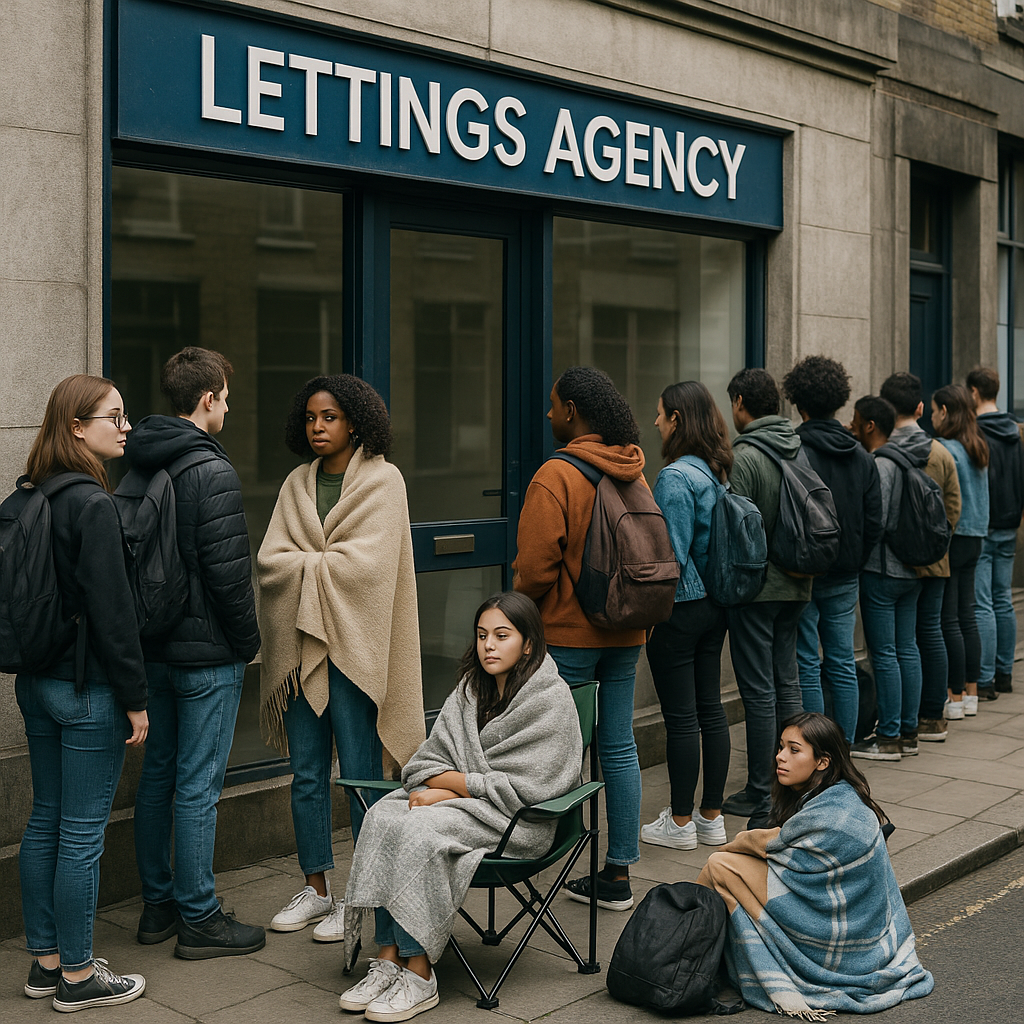
The inspiration for this image is a little grim – students had to queue overnight outside a listings agency just to get a house.
Starting the process
Find your friends
Look for folks that you vibe with. And by vibe with, I mean: Have the same lifestyle, similar waking hours, align on views of cleaning the house/sharing groceries etc. These are very important considerations. I know of a friend group that ended in disagreement because one member was fine living in filth, while another was obsessive about cleanliness. The latter ended up doing most of the heavy lifting, and was understandably quite upset.
Shortlist Locations
Look for places near your college and your department. The convenience is unparalleled especially when work gets busy or you have late night social activities in college. It’s also worth checking for proximity to a supermarket, city centre, and other hubs like Westgate.
It would be great if you can scout out the locations earlier without letting the agent know – see if you can speak with the tenants already living there. Your fellow students will probably be happy to give you the real living experience
You should be careful to look at places in both isolated and convenient locations, so that you are aware of the differences in rent. If you want to save on rental by moving to a more isolated place, do consider getting a bike because walking across Oxford can be a pain when you’re rushing for a tutorial.
I’d always recommend Cowley: Cheaper rentals, great food options, slightly rougher than the rest of Oxford but still wonderfully peaceful. However, I would recommend against Summertown or Jericho areas. These two are very posh but also very far from most of the university.
Handling landlords
The landlord/agent is not your friend, but a private business that is profit-maximising. That is the mentality you need to have going into discussions with them. If you are an international student, they will likely try and exploit the perceived information asymmetry as well as the fact that you might not be in the country post-graduation to dispute any overcharging
Do read up on reviews about different lettings agency – you will naturally start off at an informational disadvantage so you should close the gap. Just highlighting some news articles here
- Agency comes under fire after student tenants queue outside in the rain for two days
- Latest Tribunal case highlights dangers of over-charging for tenancy changes
Tenant Deposit Service
Putting this upfront because this is the most brilliant innovation in the UK housing market. There are a few implications for this:
- When you pay in your deposit, the landlord has to place your deposit with the Tenant Deposit Scheme as well as give you the required information within 30 days. If they don’t, you can potentially get 1-3X the amount of deposit.
- If you do not receive the notification/information that your deposit is protected, email them and remind them of this rule.
More helpful information from Citizens Advice here.
Moving in
You should receive a check-in report paid for by the landlord. This will document the conditions of each part of the house prior to your moving in. Take note of all damages (not just the significant ones!) and check the conditions on your first day of moving in. Also make sure that there are no additional damages that are not included in the check-in report. I spent the first day of moving in taking pictures and videos around the house to capture the original state of the place.
Repairs and maintenance
You are responsible for any damage that you cause, unless it is wear-and-tear. After all, they can’t expect you to pay for the depreciation that they have profited over the years.
On entering the house, it is very important that you check for all signs of damages. Anything damaged can be sent to the landlord, which is their responsibility to fix. They may take their leisurely time about the repairs though, and it’s not advisable to start a quarrel with the landlord so early in your tenancy. I would recommend constantly reminding them with email requests until they commit to a repair date. This also leaves a paper trail for the future, which could be useful.
Sub-letting
Leases tend to be for a year, though you might (unlikely) be able to negotiate a lease of 11 months. If you are moving out of Oxford for the summer/other term breaks, you could look for a sub-tenant. Most tenancy contracts will prohibit this, so do check if this is legal (and be aware of the risks if you do decide to do so anyway!). I always recommend sub-letting to friends first. The last thing you want is a stranger that trashes the place you are on the hook for and/or not paying the rent.
Documentation
You should save all your potential major disputes for the end of the tenancy if possible. You don’t want to be evicted in the middle of the school term and have to deal with moving while working on the Oxford academic timeline. Also, it does get stressful to be on bad terms with your landlord while you are still living in it. You should however keep thorough documentation of all the issues you face so that you can present it in any disputes during the end of the tenancy.
Ending the tenancy
The landlord will try and take as much of your deposit as possible. Your job is to make sure the forfeited amount is as close to zero as possible. Legally, the landlord can only take a portion of your deposit to cover 1) rent that is unpaid 2) any damage attributable to you that is not due to wear and tear. That said, they do have several tricks up their sleeve.
The first tactic is just ignoring you – the money is in their hands as the status quo. Immediately after your tenancy ends, send an email (don’t text, don’t verbally ask, you want a paper trail) asking for your deposit back. You can also request for it online for some deposit schemes. Personally, my agent just ghosted my email and I received no response for 31 days.
If they do reply you, that’s a bonus. That said, they may then resort to the second trick: Overcharging. They will send you a list of deductions – items in which they think they should be able to take money from your deposit for. You can challenge deductions you deem to be unfair with the deposit protection service and it will be on the landlord to prove that these damages have been caused.
Remember how I spent the first day taking videos? This ended up becoming very important as I was almost held accountable for some mould that had darkened the ceiling long before we moved in. Fortunately, my photos showed that the mould was already there and there was no way for the landlord to charge us.
At any point within these negotiations, they may still choose to ghost you. In this case, fallback and complain to the alternative dispute resolution service. Once you trigger this, the landlord is compelled to reply, or the scheme may just decide to award the full deposit back to you. Hurrah!
———————-
It can be a landlord-eat-renter world out there. Some people do have positive experiences with their agents, or just uneventful stays, though I would always recommend you spend some time doing research and proper documentation when you move in. After all, these are people who are in this line of business and you likely have little rental experience, so the information asymmetry makes you a prime target to exploit.