“For the loser now will be later to win” – Bob Dylan
A few months after I received my Oxford offer letter, I mapped out my life with great precision. While awaiting matriculation, I planned the societies I’d join, the internships I’d secure, and the career trajectory I’d follow. I envisioned leveraging the Oxford Alpha Fund to become a finance wizard, joining an investment bank for two years, pivoting to private equity, and eventually launching into Harvard, Stanford, or Wharton for my MBA. From there, I’d build a startup, make a quick exit, and retire early.
Fast forward to today, and the version of me who wrote that plan would barely recognise the person I’ve become. Some parts of the plan came to fruition: I landed a graduate role in a country I once thought was paved with gold. However, I’ve also found a new opportunity completely outside of finance that I would not have envisioned as a student. An elite education is a temporary accelerant, not a life‑long guarantee. In fact, over-fixating on linear plans can be actively harmful if you expect it to last forever, or use it as a basis for comparison.
The Oxford head start
A head start can indeed put you ahead of the curve, sometimes offering compounding advantages. Oxford, with its unparalleled resources and network, is an incredible head start. It’s a privilege that opens doors many don’t even know exist. However, while the prestige helps you stand out from your competition, it’s definitely not a permanent advantage.
For those just beginning their careers, life is still profoundly malleable. Securing a coveted first job is significant, but it’s not destiny. In fact, life becomes more dynamic after school, when there’s no fixed curriculum or structured path. Career trajectories often take surprising turns.
Consider the people who struggled through university without landing a single internship but secured fantastic roles thanks to a lucky break. Or think of computer science students from the 1990s, who pursued their field out of passion, not profit, only to ride the wave of the internet revolution post-2001 into meteoric career growth.
Success and wealth manifest in myriad ways. Some people make fortunes selling carpets or patents, while others thrive in trades, trading, or riding waves of market trends. One lucky breakthrough be it timing, networking, or serendipity, can make all the difference between having wealth and having none.
I used to hold the investment banking to private equity pipeline as a holy grail. Yet, I saw so many students coming out from prestigious programmes going into less sexy fields like marketing, or even industrials. Since there was much lower competition going off the beaten-track, their academic credentials helped them advance further than it did in professional services chock-full of individuals with similar prestige.
Comparison is thief of joy
I used to compare myself against others. I would look at my income and wonder how I could bring it up higher. I had Oxford batch mates get into Y-Combinator, become portfolio managers in hedge funds.
However, I’ve realised that the key to sustainable living is to avoid getting lost in comparison. Look to others not as benchmarks for your own worth, but as windows into opportunities you might not have considered.
Furthermore, it’s so much easier to compare outcomes without comparing process. Sure, you might have graduated from Oxford like your friend, but were you willing to sacrifice as much as they did in terms of social life when you were there?
Comparison may be the thief of joy if left unchecked, but it can also drive progress if approached constructively. Stay in your lane, make your own luck, and let the success of others expand your horizon, not diminish your confidence.
A Parable of Perspective
This brings me to a well-known parable that has profoundly shaped my thinking after a mentor brought it up regarding the outcomes I have today:
Once, in a small village, there lived a wise old farmer who tilled his fields with quiet dedication.
One evening, his only horse escaped into the hills. The villagers came to console him. “What terrible misfortune!” they said.
The farmer shrugged and replied, “Perhaps.”
A few days later, the horse returned, bringing two wild horses with it. The villagers were amazed. “What incredible luck!” they exclaimed.
The farmer remained calm. “Perhaps,” he said again.
Not long after, the farmer’s son tried taming one of the wild horses but was thrown off and broke his leg. Once again, the villagers offered their sympathies. “How unfortunate!” they said.
The farmer, unperturbed, replied, “Perhaps.”
A week later, soldiers arrived to conscript young men for war. Seeing the farmer’s son injured, they left him behind. The villagers congratulated the farmer. “How fortunate for you!” they said.
The farmer smiled faintly and replied, as always, “Perhaps.”
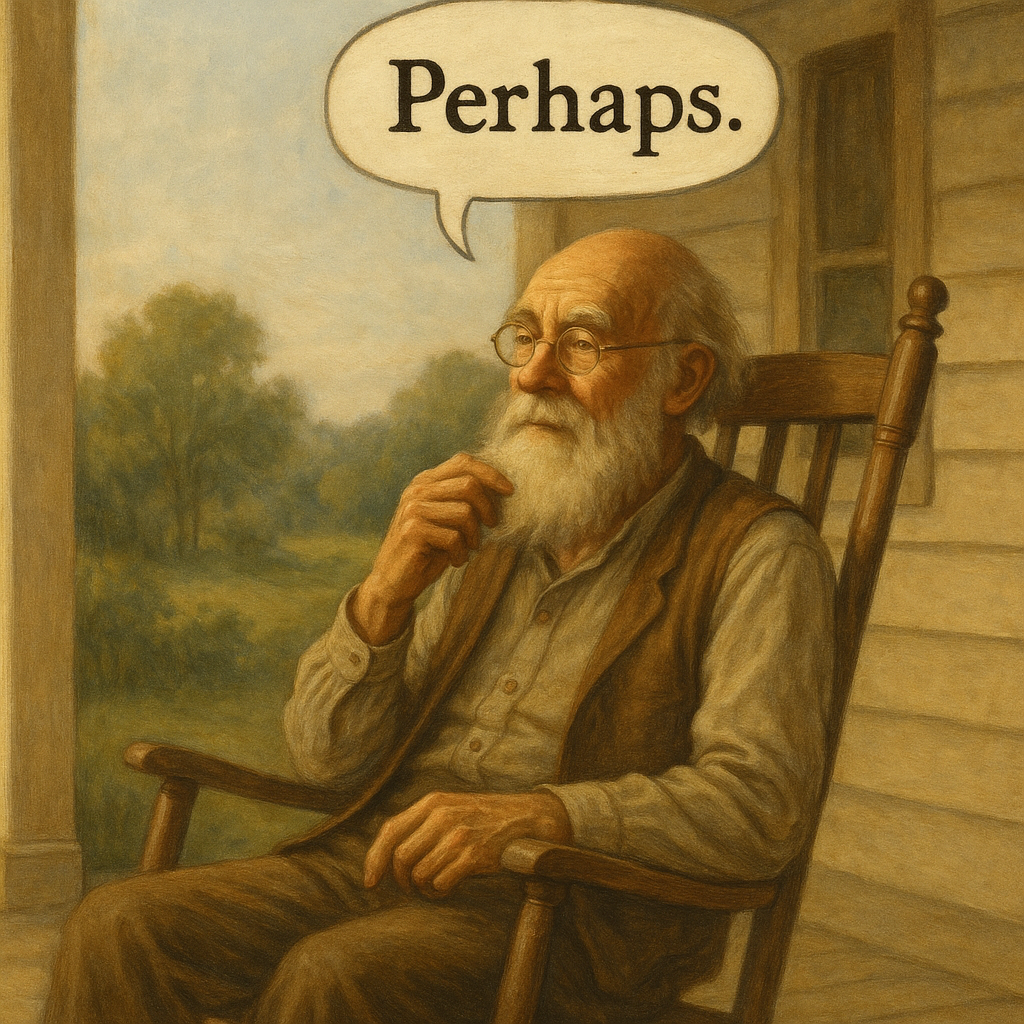
Some of those momentary disasters feel like they are career ending: An offer rescinded, a rejected internship, a layoff. The farmer reminds me how many of them later reveal themselves as blessings in disguise.
No Fixed Path
This story is a reminder that life’s twists and turns defy prediction. What seems like a setback today may be the foundation of tomorrow’s triumph, and vice versa. There is no fixed path, only the opportunities and choices we encounter each day.
Growing up, I believed success was governed by rigid predictors and preconditions. Oxford would lead to a bank, a bank to private equity, and so on. But life doesn’t work that way. Instead, I keep my eyes open to opportunities from all domains. I also take my work as an experiment in what I like, rather than an ends in itself. That allows me to understand my preferences and guide my path forward.
Recognising this has opened my eyes to the countless paths branching out from where I stand now. This realisation has made life far less deterministic, and hence more exciting than I once imagined. I might have won the privilege of Oxford before, but I still have to fight every day to make sure I continue winning.