Getting an offer from Oxford might seem like a life changing experience. The day I got my offer, I was so elated that I nearly ran into the path of an oncoming car. Fortunately, the car stopped in time so I didn’t end up like the main character in Pixar’s Soul. As such, it may seem odd that I’m writing this article to frame considerations about whether you should take the offer.
Getting into one of the most prestigious educational institutions in the world is a major accomplishment and you should definitely celebrate this incredible validation of your potential. Since I was 12, being admitted to Oxford University was a dream I had barely dared to hope for.
That said, even amidst your excitement and joy, there are practical considerations. For international students, I want to help you make a more informed choice. Regardless of your choice, being clear about the costs and benefits can be instrumental in charting your future. I allowed my emotions to guide my decision making, rather than approaching the decision with a cool head and rationality.
Course Fees and Finances
This is a key reason why I hesitated in choosing to study at Oxford. Frankly, if it had been any other university aside from Oxford and Cambridge, I would probably have turned the offer down because of the expensive tuition.
Fees for Economics and Management are as follows for 2024 entry:
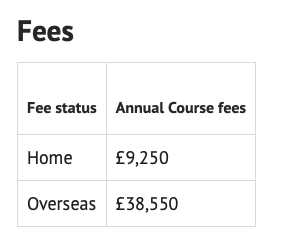
Fees are higher for STEM subjects, due to the factoring in of lab costs. The total cost can easily exceed £50,000 per year including living expenses
The reason for this is because the government provides little financial support, but caps the fees for British students, with fees having been frozen at £9,250. This compels universities to charge the unprotected segment more in order to cover costs. In fact, non-EU students make up almost 20% of total income of UK universities.
There will be other hidden costs as well, although course fees eclipse the rest of the spending. Living costs are estimated at about £1,300 to £2,000 a month. Staying in college can come at an exorbitant rental. Due to the persistent demand from students, renting a place from the surrounding private landlords won’t be cheap either – with rents of £500 common, without utilities.
Academics
The Oxford tutorial system works by having mass lectures to introduce the content to you, followed by small group tutorials that allow you to discuss the subject matter with tutors who are experts in the subject. Some of the best tutorials I’ve had involved the tutor pushing hard on our inherent assumptions and synthesising the perspectives of the academic literature to establish our own convictions. There’s so much cross-fertilisation as well; dropping into a lecture for another course with the help of a friend in that course is really easy.
However, your mileage may vary. Imagine having a series of private concerts where sometimes Beyoncé shows up, but other times it’s her lesser-known cousin who just learned to play the guitar. I have had tutorials that were one tutor to seven students, and multiple instances where the tutor was a DPhil candidate.
Some professors would have done extensive research, some tutors not so much. If this is something that appeals to you, please ensure the tutors affiliated with the college are ones you want to learn from – possibly if they have written papers that you find especially fascinating. You will typically have way more opportunities for interactions with the tutors from your college such as over dinners, and they are usually immensely happy to share about their work. I’ve had the privilege of meeting professors who have engaged in fascinating research questions that I had never even thought to ask, yet it quickly becomes obvious how vital the research can be. Wellbeing and happiness, for instance, is explored as a study of morale within an organisation, among other aspects.
Getting a First is also anecdotally much harder in Oxford and requires focused work for the eight week term. The compressed syllabus means that you have much less time to process information. Most students end up feeling pretty down by the mid-term (week 5 blues, yay!). You do get a fantastic six-week break in both Winter and Easter though.
Career opportunities
As an E&M student, finance and consulting dominated the list of potential career choices among my course mates. Many banks and consulting firms seek out candidates from “target schools”, which are led by Oxford, Cambridge, and LSE. I list the considerations of working in London in a separate article, but I’ll focus on the student experience here. The E&M degree does give students the latitude to explore outside of the degree.
Firstly, most Bachelor of Arts degrees only have examinations in the first and third year, leaving the second year open for job hunting. Secondly, the ecosystem of tutors and students is cognisant of the demands of applying for a rigorous job in the professional services. I once emailed my tutor to skip a tutorial in order to attend an interview, and my tutor gave his heartfelt blessings. Personally, I found meeting professionals from industry during networking coffee chats to be rather synergistic with the academic content.
That said, I’m always reminded of how a friend of mine once remarked on her choice of studying English: “That’s the beauty of Oxford. You can study whatever you want, and still get a job after”. She later became a management consultant at one of the top firms in London. If you are looking at studying in the UK with the aim of building a career here, Oxford is definitely the one with the highest return on investment.
The prestige of Oxford University will probably still be helpful when it comes to finding a job outside of the UK, should you choose to leave the UK after graduation. However, if you do end up working back in your home country, you will likely have a smaller network compared to your peers who stayed behind to study. It does become quite difficult to stay in touch with friends residing abroad post-graduation.
Social life
Oxford offers a wide range of activities and this is really incredible. You can stroll to the oldest public museum in Europe on your way to the supermarket, or chat with friends in dining halls that served Margaret Thatcher or were the headquarters for the D-Day landings. You might end up having drinks in the first parish to be created since the Reformation – a church that opened in 1835 and is now a bar called FREUD – or having a cup of coffee in the Queen’s Lane Coffee House, which dates back to 1654.
You can dabble in different activities irrespective of degree – biotechnology, longevity, psychedelics, start-ups, Taylor Swift fan clubs. It is this rich soup of activities that brings Oxford to life. Be part of the Union and become a Big Name on Campus if the practice of politics runs in your veins. Join as many sports as you like, and go for the rowing team if you fancy early morning workouts.
In terms of environment, Oxford is a superb town, bustling with enough activity to keep it perennially fresh. At the risk of being a little trite, I will admit that Oxford pales in comparison to London. You will have to make your way down to London for top-tier musicals and clubbing that is more exciting and wild – where your fellow club-goers aren’t all students.
However, do note that travel out of the UK for a holiday is an absolute pain. Although you can snag cheap tickets from Ryanair, the bus from Oxford to Stansted airport can be as expensive as the flight and add four hours of journey time.
Final remarks
I must admit that I made the choice to study in Oxford out of the fear of regret – that I would hate myself down the road for passing on the chance to study at one of the world’s oldest and most reputed institutions. Still, it was an expensive decision that has led to invaluable memories across my undergraduate education. I would urge you to consider this alongside your financial situation and the quality of subsidised education you may have available to you in your home country.
If you are determined to go to the United Kingdom or just abroad, Oxford is definitely a great option in terms of branding and life. The prestige and awestruck feeling you get from striding along these halls blessed with history complements the bucolic environment of the town.